

Linda Limehouse
AI-Certified Realtor® · Meybohm Real Estate
Aiken SC · North Augusta SC · Augusta GA
HOA vs. No HOA in North Augusta: What Buyers Need to Consider
North Augusta SC HOA No HOA CC&Rs HOA Fees Maintenance Resale CSRA Relocation
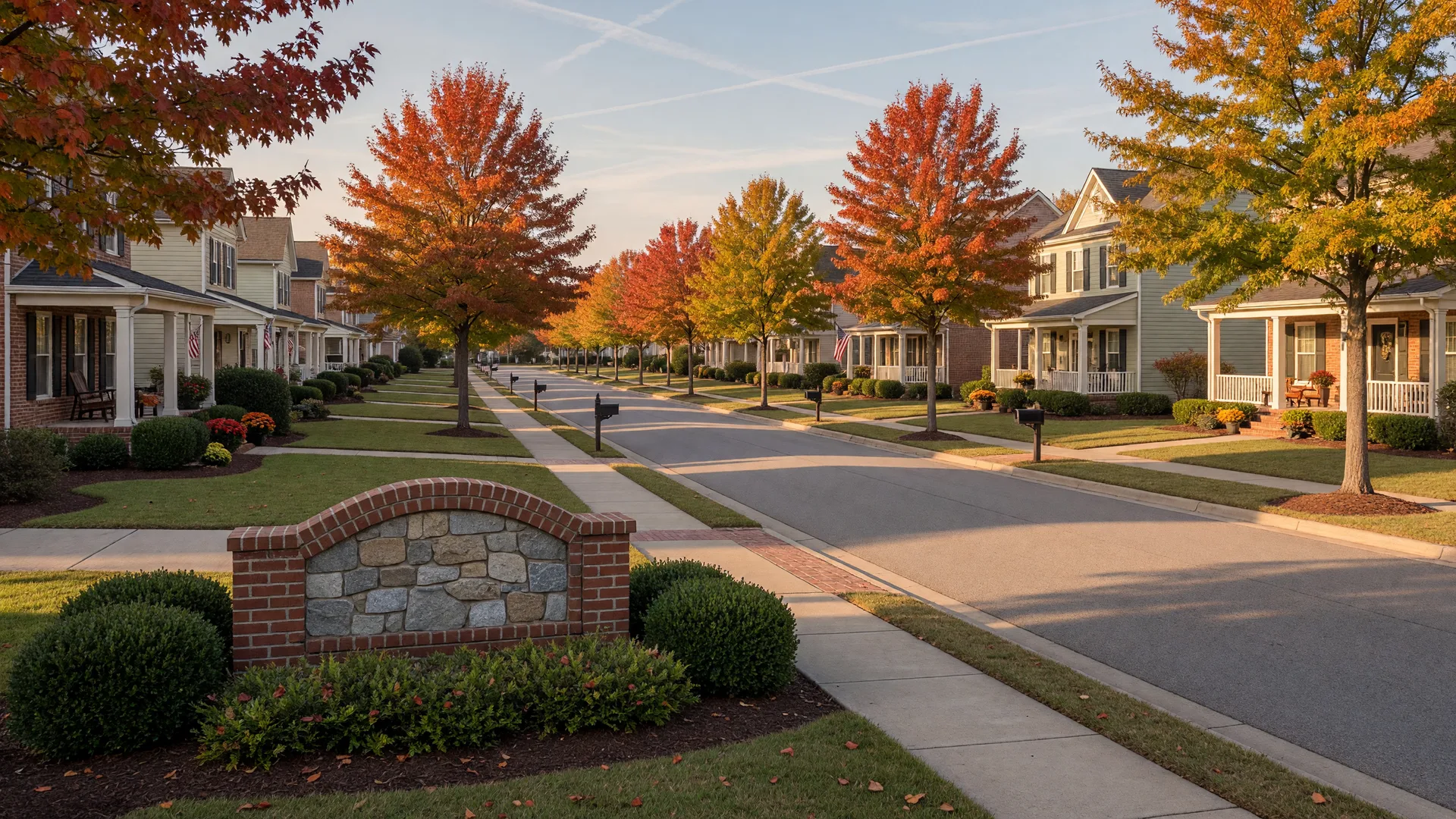
North Augusta offers both worlds: newer riverfront communities and planned developments with homeowners associations, plus older, established neighborhoods and acreage lots with no HOA at all. The choice shapes what you pay each month, what you can do with your property, and even who mows the grass at the entrance to your street. This guide compares the fees, restrictions, maintenance responsibilities, and resale considerations on each side so you can pick the fit that is right for your family.
Neither option is objectively better. Some buyers love the consistency and amenities an HOA provides, and others want the freedom and lower overhead of no association. The key is understanding exactly what you are agreeing to before you make an offer, because membership in an HOA comes with recorded covenants that bind you and future owners of the home.
The details below are general on purpose. HOA fees, rules, and financials vary by community, so the right move for any specific home is to read that community's governing documents and current budget before you commit.
Key Takeaways
- An HOA collects fees and enforces covenants to maintain common areas, run amenities, and keep the neighborhood looking consistent; a no-HOA home leaves upkeep to each owner and the public sector.
- HOA fees vary widely by community and cover whatever the governing documents specify, from entrance landscaping to pools, clubhouses, master insurance, and reserves.
- HOA restrictions typically cover architecture, paint and roof colors, fences, parking, boats and RVs, rentals, pets, and landscaping; no-HOA homes may still carry deed restrictions recorded on the title.
- In an HOA, common areas and sometimes exteriors are maintained for you; with no HOA, you own every repair and every lawn, so budget for maintenance either way.
- A well-run HOA can steady resale appeal, while a poorly run one can be a drawback; many buyers search for one or the other on purpose, so know the community's reputation.
What This Guide Covers
What Does an HOA Actually Do in a North Augusta Community?
A homeowners association is the governing body of a residential community. It collects fees from every homeowner and uses that money to maintain common areas, enforce community rules, and manage shared amenities. When you buy a home in an HOA community in North Augusta, you automatically become a member, and you agree to follow the covenants, conditions, and restrictions (CC&Rs) recorded on the property along with any rules the board adopts.
The scope of an association varies. Some North Augusta HOAs cover a compact subdivision with a pool and entrance landscaping, while others govern larger planned communities with trails, riverfront access, and multiple amenities. A property owners association (POA) is a similar structure that sometimes covers a bigger area with shared facilities like a golf course or equestrian center, and the practical questions to ask are the same.
No-HOA neighborhoods, by contrast, have no association, no dues, and no shared budget. Most established North Augusta areas and most acreage properties fall into this category. The county and city still maintain public roads, and each owner maintains their own property, but there is no one enforcing a neighborhood-wide standard.
How Do HOA Fees Work, and What Do They Cover?
HOA fees in North Augusta are recurring assessments billed monthly, quarterly, or annually, and the amount depends entirely on the community. In some neighborhoods the fee is modest and covers basic common-area maintenance like entrance landscaping and lighting. In communities with pools, clubhouses, tennis courts, fitness centers, gated access, or trails, the fee reflects the cost of building and maintaining those amenities.
The governing documents define what the fee covers at your specific address. Typical line items include common-area maintenance, entrances and landscaping, community roads, amenities, master insurance, management costs, and reserves set aside for future repairs. Full-service communities may also arrange exterior maintenance and lawn care for individual homes, which shows up as a higher fee.
Associations can also charge special assessments when the regular fees and reserves cannot cover a major expense, which is why the financial health of the HOA matters. Before you offer, ask for the current budget, the reserve study, and recent board meeting minutes. An association with healthy reserves and a history of steady, predictable fees is a very different proposition from one juggling unpaid assessments or deferred maintenance.
HOA dues sit alongside other recurring ownership costs, and relocating buyers usually want the whole monthly picture at once. My guide to what it really costs to buy a home in North Augusta SC puts fees, taxes, and insurance together, and my SC vs. Georgia property tax guide for relocating buyers covers the tax side of the comparison if you are looking across the river too.
What Restrictions Come With an HOA's Rules?
The CC&Rs are the recorded rules that govern an HOA community, and they can touch almost every visible part of homeownership. Common restrictions cover exterior paint colors and materials, roofing, fencing, landscaping and lawn standards, parking including boats and RVs, holiday decorations, rentals, pets, and additions or outbuildings. Many communities require an architectural review before you change the exterior of your home, and requests go through a committee or the board.
The tone of enforcement matters as much as the rules themselves. Some boards are hands-on and consistent, others barely enforce anything, and enforcement culture can change as board members rotate. Reading the CC&Rs, the rules and regulations, and recent meeting minutes tells you what the paper says, and asking current residents tells you how it actually plays out day to day.
No-HOA does not mean no rules. Deed restrictions recorded on the title can still govern use of the property, and the county or city zoning ordinance applies to every property in North Augusta regardless of any association. The difference is that without an HOA there is no association staff, no dues, and usually no neighbor-enforced design standard; it is just you, your title, and the local code. My guide to understanding HOAs and covenants in the CSRA goes deeper into how CC&Rs are written and enforced.
Who Maintains What in an HOA vs. No-HOA Home?
In an HOA community, the division of labor is written into the governing documents. The association typically maintains the common areas: the entrance, landscaping, community roads, and shared amenities like the pool or clubhouse. Individual homeowners always remain responsible for the interior of their home, and depending on the community, the exterior, roof, and lawn may be the owner's job or the association's. In full-service communities the fee covers outside upkeep and lawn care, and in others you still mow your own grass.
With no HOA, you own it all. The roof, the HVAC, the siding, the gutters, the driveway, and the lawn are yours, and there is no shared fund for anything beyond your own property. Many buyers find that freedom appealing and the responsibility fine; the key is remembering that maintenance is a real monthly cost even when there is no HOA bill, so a solid home inspection and a maintenance budget matter even more without an association to lean on.
New construction adds a wrinkle worth planning for: builder and HOA obligations are separate, and not every new North Augusta community runs the same way. My guide to new construction communities in North Augusta SC covers what to confirm with the builder and the HOA before you sign.
How Does an HOA Affect Resale in North Augusta?
Whether an HOA helps or hurts resale depends on the specific community. A well-managed association keeps the neighborhood looking consistent, maintains its amenities, and holds its reserves, which tends to keep curb appeal high and can make the community attractive to the next buyer. Many buyers in North Augusta actively search for HOA communities because they want sidewalks, a pool, and enforced standards, and that demand supports resale.
The flip side is just as real. A community with weak finances, a history of special assessments, or heavy-handed enforcement can give buyers pause, and some buyers filter out HOAs entirely because they want acreage, horses, or simply fewer rules. A home in a no-HOA neighborhood resells on the strength of the street's condition, the home itself, and the local market, with no association to smooth over a neighbor's neglected yard.
When we sell an HOA home, the buyer's due diligence almost always includes the association's financials, and when we sell a no-HOA home, the questions shift to deed restrictions and easements. Either way, the reputation of the street and the community is the real driver, and that is something I can show you neighborhood by neighborhood. The condo vs. single-family HOA comparison for Augusta covers the attached-home side of this decision if you are considering townhomes or condos as well.
What Questions Should You Ask Before Buying Either Way?
For an HOA home, the documents tell the whole story. Here is what I ask every community for before my buyers make an offer:
- What are the current fees, and how are increases limited? The budget and governing documents define the regular assessment and the process for changing it.
- What do the CC&Rs actually prohibit? Read them, not a summary, and ask which rules are enforced in practice.
- Are the reserves healthy? Request the current budget, the reserve study, and recent board minutes.
- Has there been a special assessment or pending litigation? Both are red flags worth understanding before you commit.
- Who maintains what at this specific lot and home? Confirm the split between the association and the owner for the property you are buying.
For a no-HOA home, the questions shift: are there any deed restrictions recorded on the title, what does the county zoning allow on this lot, and how are private roads or shared utilities handled if any exist? Your closing attorney can confirm the recorded restrictions, and the county can confirm zoning for the parcel. It is a shorter checklist than an HOA's, but it deserves the same attention.
If you are still deciding which North Augusta neighborhoods fit your lifestyle, my North Augusta neighborhood guide compares the riverfront, established, and growing areas, and my best places to live in North Augusta by lifestyle guide sorts them by what you value most.
Linda's Local Insight
Linda Limehouse
AI-Certified Realtor® · Meybohm Real Estate
In more than 20 years of helping families buy in North Augusta, I have seen buyers fall for a home and then learn the HOA rules do not fit their plans, and I have seen buyers assume a no-HOA street stays pristine on its own. Neither assumption holds up. The buyers who end up happiest read the documents before they fall in love, whether that means the CC&Rs of a riverfront community or the deed restrictions on an acreage lot.
I treat the HOA review as a fixed part of due diligence, right alongside the inspection and the appraisal. If you hesitate over a rule, a fee, or a community's financials, that hesitation is worth listening to, because it is not going to disappear after closing.
When you tour homes with me, I pull the HOA documents, the budget, and the enforcement history for any community we consider, and I help you size up no-HOA streets by their condition and their deeds. My moving to North Augusta SC guide is a good place to start the broader relocation research.
Your Takeaway
- Read the documents before you fall in love. CC&Rs, bylaws, rules, budget, reserve study, and minutes tell the real story of any HOA.
- Know what the fee covers. Fees are not good or bad on their own; coverage, reserves, and history are what matter.
- Budget for maintenance either way. An HOA trades a fee for shared upkeep; a no-HOA home trades the fee for do-it-yourself responsibility.
- Check deeds for no-HOA homes. No association does not mean no restrictions, so confirm what is recorded on the title.
- Match the community to your lifestyle. Both HOA and no-HOA homes resell well in North Augusta when the community is well kept and well run.
Frequently Asked Questions
Are most North Augusta neighborhoods governed by an HOA?
Many newer North Augusta developments and planned communities have a homeowners association, while many older, established neighborhoods and acreage properties do not. Riverfront communities, townhome developments, and most new construction subdivisions tend to come with an HOA, and established family neighborhoods like Belvedere and rural lots typically do not. Because the mix varies street by street, it is worth asking about every specific home you tour rather than assuming one way or the other.
What do HOA fees in North Augusta typically cover?
HOA fees cover whatever the community's governing documents say they cover, and that varies widely. Common items include maintenance of common areas, entrance landscaping, community roads, and amenities such as pools, clubhouses, playgrounds, or trails, plus master insurance, management costs, and reserves. Full-service communities may also handle exterior upkeep and lawn care. There is no single typical number for North Augusta, so review the current budget and reserve study for the specific community before you offer.
What happens if I break an HOA rule in North Augusta?
Most associations follow a progressive enforcement process that starts with a notice or warning letter, can move to fines, and in some cases can lead to a lien on the property. The details live in the community's covenants, conditions, and restrictions (CC&Rs), the rules and regulations, and the enforcement policies the board actually applies. Reading those documents before closing is the best way to know what you are agreeing to. If a rule is unclear, ask your Realtor or an attorney.
If a home has no HOA, who maintains the neighborhood?
With no HOA, there is no association collecting dues and no shared budget for common areas, so each homeowner maintains their own property and the county or city handles public roads and services. Neighborhood appearance depends on the individual upkeep decisions of your neighbors and on any deed restrictions recorded on the titles. Some no-HOA areas look beautifully kept because the owners care, and others vary more, so the condition of the street you tour is a good signal.
Does buying in an HOA community help or hurt resale value in North Augusta?
It can go either way, and a lot depends on how the association is run. A well-managed HOA with healthy reserves and even enforcement helps keep the neighborhood looking consistent and attractive to the next buyer. An association with weak finances, deferred maintenance, or unpredictable enforcement can be a negative. Many buyers filter for HOA communities on purpose, and others filter them out entirely, so your resale pool depends on the reputation and condition of the specific community.
Can I choose a no-HOA home and still avoid living next to an HOA community?
You can choose a home outside an HOA, but proximity to one does not make you a member. What matters is whether your specific parcel is bound by covenants recorded on its title. In North Augusta, it is common to find acreage and older lots with no association, and no-HOA buyers should confirm with their closing attorney that no covenants apply and check for any deed restrictions that do exist.
Related Resources
Relocation
Moving to North Augusta SC
Neighborhoods, the Savannah River, the Greeneway, Riverside Village, and relocation tips from Linda.
HOAs in the CSRA
Understanding HOAs and Covenants in the CSRA
What buyers across Aiken, North Augusta, and Augusta should know about CC&Rs, fees, and covenants.
New Construction
New Construction Communities in North Augusta SC
Builders, warranties, HOA fees, incentives, and construction timelines in North Augusta's new developments.
Condos & Townhomes
Condo vs. Single-Family: The HOA Truth Downtown Augusta Buyers Should Know
How HOAs, fees, and rules differ when you buy attached housing in the Augusta area.
Still Deciding Between HOA and No-HOA?
I help buyers across North Augusta compare HOA and no-HOA communities with the real documents in hand, so the choice fits your budget and your lifestyle. Whether you are relocating or moving across town, let's find the right fit.
Linda Limehouse
First AI-Certified Realtor® | Meybohm Real Estate
SC License: 67440 · GA License: 323267