

Linda Limehouse
AI-Certified Realtor® · Meybohm Real Estate
Aiken SC · North Augusta SC · Augusta GA
Moving to Aiken With Horses: The Complete Relocation Guide
Aiken SC Horse Relocation Boarding Horse Transport Pasture Riding Facilities Equestrian
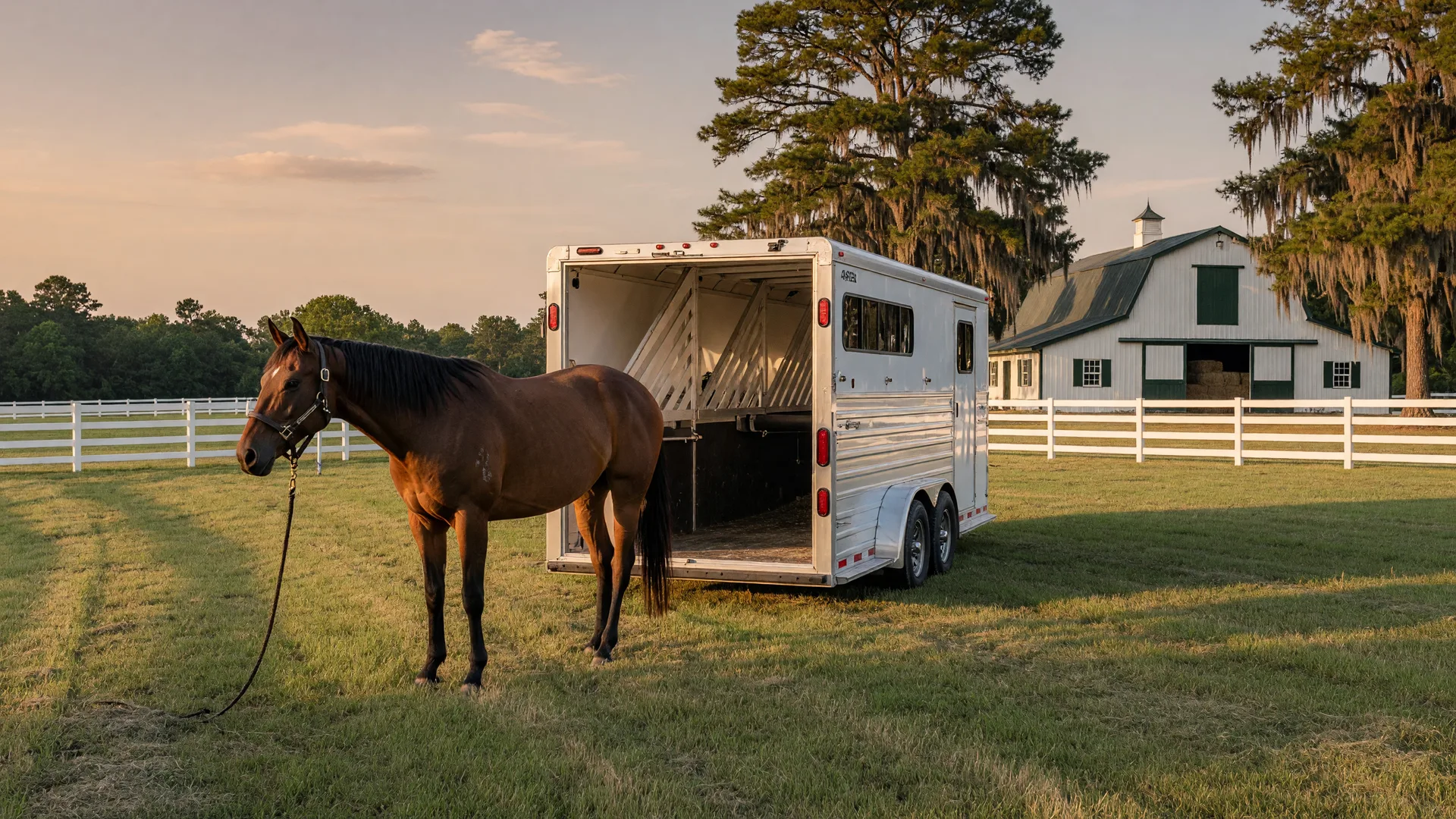
Moving to Aiken with horses is a step-by-step process that works best when you plan it in phases. This complete relocation guide covers boarding options, property requirements for keeping horses, riding facilities, transportation of your horses, and pasture considerations, so you know what to arrange before you arrive and what to look for as you search for the right property.
Aiken has been a horse town for well over a century. Between Hitchcock Woods with more than 2,100 acres of equestrian trails, year-round riding weather, a deep network of equine veterinarians and farriers, and a community that genuinely understands horse life, it draws horse owners from across the country. The move itself, however, takes genuine forethought. The relocations that go smoothly are the ones where horse logistics come first: transport, temporary boarding, and a local equine team, with the property search running alongside at a calm pace.
Key Takeaways
- ✓ Plan two to three months out. Book transport and temporary boarding before you start touring properties in earnest.
- ✓ Choose your transport route early. Professional shippers handle long hauls; do-it-yourself hauling works for shorter moves, and both require current health paperwork.
- ✓ Secure temporary boarding first. Aiken facilities accept transitional horses, which lets you buy the right property instead of the first available one.
- ✓ Match the property to the herd. Zoning, acreage, fencing, water, barn condition, and pasture quality all matter more than the house alone.
- ✓ Build your equine team before arrival. A veterinarian, farrier, and trainer lined up ahead of time means consistent care from day one.
Table of Contents
- Why Do Horse Owners Choose Aiken SC?
- How Far in Advance Should You Plan the Move?
- How Will You Transport Your Horses to Aiken?
- What Boarding Options Are Available in Aiken?
- What Property Do You Need to Keep Horses in Aiken?
- What Pasture Considerations Should You Evaluate?
- What Riding Facilities and Trail Access Should You Look For?
- Who Should Be on Your Local Equine Team?
- What This Means for Buyers
- Linda's Local Insight
- Client-Friendly Takeaway
- FAQs
Why Do Horse Owners Choose Aiken SC?
Aiken's equestrian reputation is not a marketing slogan; it is the result of more than a century of riding tradition. The mild climate supports near year-round riding, and the sandy loam soil that defines much of the area drains naturally and is gentler on horses' legs than heavy clay. Hitchcock Woods, one of the largest urban forests in the country, offers more than 2,100 acres of riding trails right in the heart of town.
Just as important is the depth of support services. Aiken has equine veterinarians, farriers, trainers, boarding facilities, feed and tack stores, and an equestrian community that welcomes newcomers at every level, from competitive riders to weekend trail riders to retirees who simply want their horses close by. That infrastructure is exactly why so many relocating horse owners choose the Aiken area over other communities.
What all of this means for your move is simple: the destination is ready for you. Your job is to bring your horses here smoothly, and that starts with a realistic plan and the right local partners.
How Far in Advance Should You Plan the Move?
Most relocating horse owners find that two to three months of lead time gives them enough room to arrange everything without rushing. That window covers booking a shipper or planning your own haul, securing a stall at a temporary boarding facility, gathering health certificates and Coggins test results, and starting property tours with a clear picture of what you need.
A longer runway makes sense if you are moving multiple horses, coming from far across the country, or relocating during a busy season when shippers and boarding barns fill up quickly. A shorter window can work if you already own a trailer and have a property under contract, but expect the logistics to feel tighter.
Confirm requirements early with the people who actually handle the paperwork: your current veterinarian for health certificates and Coggins tests, your chosen shipper for their documentation policies, and South Carolina animal health officials for any entry requirements that apply to your horses. These details change, so verify them rather than assuming.
How Will You Transport Your Horses to Aiken?

You have two main options for transporting horses to Aiken: hire a professional equine shipper or haul your horses yourself. The right choice depends on distance, the number of horses, your experience hauling, your equipment, and your comfort with the logistics.
Professional Equine Shipping
For long-distance moves, professional equine shippers handle the details that make a long haul safe: route planning, rest stops, feeding and hydration schedules, and the documentation trailer. When you interview shippers, ask about their experience with your type of horse, the condition and maintenance of their trailers, how they handle rest stops and emergency situations, and their pickup and delivery schedule.
Reputable shippers will ask to see health certificates and Coggins results before they load your horses, so have that paperwork ready. Booking early, especially in warmer months when demand is highest, is worth doing as soon as your move dates firm up.
Hauling Your Own Horses
If you haul your own horses, start with a thorough check of your trailer: tires, brakes, lights, flooring, and hitch. Plan your route with rest stops every few hours, and carry enough hay and water for the trip. Horses need forage during transport, and hydration matters even more in warm weather.
Whichever option you choose, your veterinarian is the right person to confirm what health documentation South Carolina requires for horses entering the state, including the timing of Coggins tests and any vaccinations. A quick phone call now prevents a delay at the state line later.
What Boarding Options Are Available in Aiken?
One of the most valuable decisions you can make while moving to Aiken with horses is arranging temporary boarding before your property search gets serious. It removes the deadline pressure that otherwise pushes buyers into the wrong property simply because the horses need a place to live.
Aiken's boarding options range from full-service facilities that handle daily feeding, turnout, and stall cleaning, to self-care arrangements where you manage daily care and use the facility's stalls, pastures, and arenas. Many barns accept short-term or transitional horses, which is ideal for relocating owners who plan to buy property within a few months.
When you tour facilities, ask the manager about turnout schedules, stall availability, on-site amenities such as arenas or round pens, trail access, and how they handle vet and farrier visits. Boarding costs and policies vary widely, so get the details in writing and confirm what is included before you commit.
A good temporary boarding arrangement gives you freedom during the home search. And if you buy a property that needs barn work or pasture improvement before your horses move over, your boarding barn keeps them safe and settled while renovations happen.
What Property Do You Need to Keep Horses in Aiken?

Buying a property for horses is different from buying a regular home, because the land and infrastructure are doing real work. When you tour Aiken horse properties, evaluate the whole system: zoning, acreage, fencing, water, and the barn.
Zoning and Horse Counts
Aiken County zoning regulates how many horses a property can accommodate, and counts are often tied to total acreage. Setback requirements may also apply to barns, run-in sheds, and fencing relative to property lines. Some neighborhoods and HOA communities add their own restrictions on fencing types, outbuildings, or livestock.
Before you make an offer, verify the zoning for the specific property with the county planning office and have your real estate attorney review deed restrictions. This is one of those details that is easy to confirm and expensive to discover late.
Acreage and Layout
How much acreage you need depends on the size of your herd and how you manage the land. A common starting benchmark is about two acres per horse when horses are kept on pasture, so a three-horse setup often points toward six to ten acres with room for paddocks and rotation. Buyers who board nearby or keep only one or two horses can make smaller parcels work, while anyone planning an arena or multiple paddocks typically wants more land.
Acreage alone is not the whole story. Walk the usable land and ask how much is open pasture versus woods, wetlands, or other non-grazing areas. A ten-acre parcel with six acres of usable pasture is a very different property from ten acres that is mostly wooded.
Fencing
Safe, well-maintained fencing protects your horses and defines how you manage your pastures. Aiken horse properties use everything from wooden post-and-rail and vinyl to electric tape and high-tensile wire. Walk the full fence line on any property you seriously consider, and look for loose boards, leaning posts, broken rails, sagging wire, and gaps.
Fencing is one of the most expensive components of a horse property to repair or replace, so note the condition honestly. If significant sections need work, that is a real cost to factor into your offer and your post-closing budget.
Water Supply
Reliable water is non-negotiable for horses. Ask whether each property uses a private well or municipal water, and find out how water reaches the stalls and paddocks. If the property has a well, request the well records, ask about depth and flow rate, and consider a water quality test as part of your inspection process.
Frost-free hydrants in each paddock are a major convenience, and water lines that already reach the barn save you a significant project. In dry summer stretches, some wells produce less, so asking about seasonal performance is worth your time. A licensed well professional can verify capacity before you commit.
What Pasture Considerations Should You Evaluate?
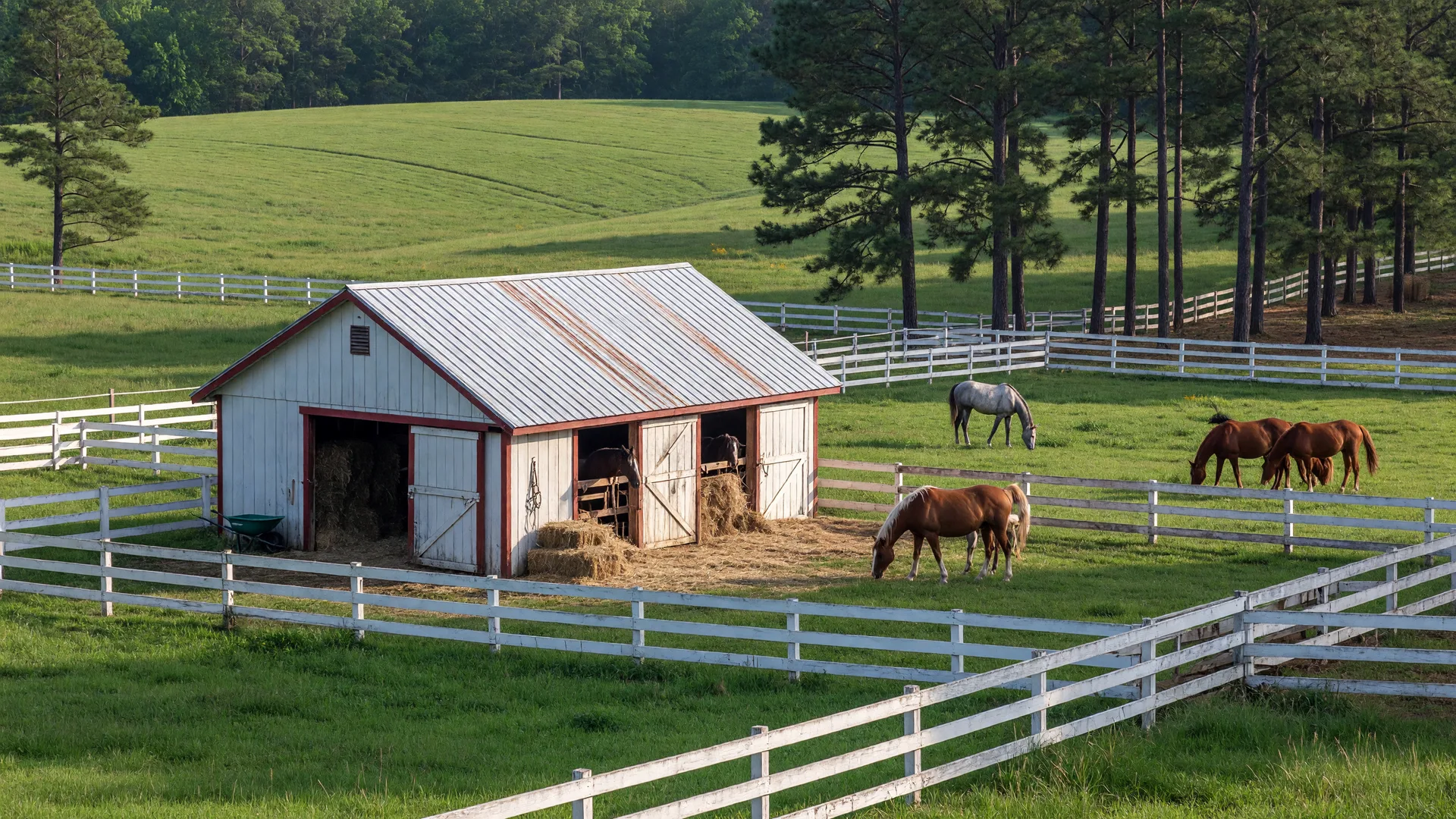
Pasture quality affects your horses' nutrition, hoof health, and grazing habits, so it deserves as much attention as the barn. Start by walking the fields and noting the grass stand: healthy, well-maintained pastures suggest the land has been cared for. Look for low-lying areas that collect water after rain, and check for erosion on slopes.
Aiken's sandy loam drains naturally and is generally kind to horses, but individual properties can still have drainage trouble spots. If you can, visit after a rain or ask the seller and neighbors how the pastures handle wet weather. Ask what the current owner does for mowing, weed control, and rotation, because those practices tell you what the land will require from you.
If you plan to improve pastures, your veterinarian or the local cooperative extension office can guide you on soil testing before you fertilize or reseed. Soil results help you make informed decisions instead of guessing.
What Riding Facilities and Trail Access Should You Look For?
For many relocating horse owners, daily riding is the point of the move. Ask whether the property includes an arena, round pen, or access to a nearby training facility, and think about what your discipline actually requires. A dressage rider, a jumper, and a weekend trail rider will weight these features very differently.
Hitchcock Woods is Aiken's signature riding amenity, and some properties offer direct or deeded trail access into it. That access is rare and valuable, and it tends to command a premium. Even without direct access, many Aiken properties sit close enough to trailheads that you can ride or trailer to a trail entrance in minutes. Ask about trail access on every property you consider, and confirm exactly how any claimed access is documented.
If a property you love lacks an arena or trail connection, ask what nearby facilities offer. Aiken's network of training barns and trails means you can often piece together exactly the setup you want, even before you build improvements on your own land.
Who Should Be on Your Local Equine Team?
One of the most overlooked parts of relocating horses to Aiken SC is building your local support network before your horses arrive. A trusted veterinarian, farrier, and trainer lined up ahead of time means your horses get consistent care from day one, and you avoid scrambling to find help during an already busy transition.
For veterinarians, look for equine-focused practices convenient to the areas you are considering, and ask about routine wellness visits, emergency response, and whether they have relationships with local boarding facilities. For farriers, ask about their schedule and how far they travel, since the best ones often book regular routes and fill up quickly.
Whatever your discipline, Aiken's equestrian community is close-knit, and recommendations from other horse owners carry real weight. The exact details of every horse's care will be specific to your animals, so verify anything that matters with the professionals themselves as part of your relocation planning.
What This Means for Buyers
If you are moving to Aiken with horses, here is the practical bottom line:
- Plan the horse move first. Transport and temporary boarding come before the property search, so you are never buying under deadline pressure.
- Tour properties with your list in hand. Zoning, acreage, fencing, water, barn condition, pasture quality, and trail access are the items that separate a great horse property from a costly one.
- Bring an equine professional to tours. A veterinarian, barn manager, or experienced horse person can spot drainage, fencing, and barn issues that a standard tour misses.
- Verify before you offer. Zoning and horse counts, well performance, and deed restrictions should be confirmed with the county, a well professional, and your attorney.
- Work with a Realtor who understands horse properties. The right guidance keeps the equestrian details from getting lost in a fast-moving home search.
Linda's Local Insight
I have helped families relocate to Aiken with their horses for more than 20 years, and the happiest moves share one trait: the horse logistics were handled before the house decision. Buyers who secure temporary boarding, book transport, and line up their local equine team find the property search actually becomes enjoyable, because they are looking for the right fit instead of a quick fix.
Aiken is not one-size-fits-all. Some buyers need a compact setup near Hitchcock Woods, others want ten acres with a full barn and room for an arena, and some are happiest boarding nearby while they settle in. The right approach depends on your horses, your goals, and your timing.
As an AI-Certified Realtor® with Meybohm Real Estate, I combine deep equestrian community knowledge with modern tools to help you evaluate properties and local services with confidence. Whether you are coming from across the state or across the country, I am here to help you and your horses land well.
Client-Friendly Takeaway
Moving to Aiken with horses is very doable, and it is far smoother when you treat it as a phased project. Start with the timeline and transport, arrange temporary boarding, then search for a property that meets the real requirements: zoning, acreage, fencing, water, barn, pasture, and riding access.
Every horse and every family is different, so confirm the specifics that matter to you with local veterinarians, farriers, boarding barns, and other equine professionals. Aiken offers a depth of equestrian life that very few communities can match, and with the right plan, the move can be the beginning of your best chapter here yet.
Linda Limehouse | First AI-Certified Realtor® | Meybohm Real Estate
Planning a Move to Aiken With Your Horses?
If you want guidance from someone who knows both the equestrian community and the Aiken property market, I would love to help. From temporary boarding to the right horse property, I can walk you through every step of the process.
Linda Limehouse
First AI-Certified Realtor® | Meybohm Real Estate
Licensed in SC & GA
Serving Aiken, North Augusta, Augusta, and the greater CSRA.
Frequently Asked Questions
How far in advance should I plan a horse relocation to Aiken SC?
Most relocating horse owners find that two to three months of planning works well. That gives you time to book transport, secure temporary boarding, tour properties, and line up local equine professionals such as your veterinarian, farrier, and trainer. The exact timeline depends on where you are coming from, how many horses you are moving, and the season, so it is worth confirming details with your shipper and current vet early in the process.
Should I board my horses temporarily while I look for property in Aiken?
Temporary boarding is one of the smartest moves relocating horse owners can make. It takes the pressure off your property search so you are not buying out of a deadline. Aiken has boarding and training facilities that accept short-term or transitional horses, and many offer full-service care while you tour homes and get to know the area. Ask each barn manager about stall availability, turnout schedules, and what their short-term policies include.
What property requirements should I check before keeping horses in Aiken SC?
The essentials are zoning that allows the number of horses you plan to keep, enough acreage and pasture for your herd, safe and well-maintained fencing, reliable water to stalls and paddocks, and a barn in good structural condition. Rules in Aiken County can tie horse counts to acreage and include setbacks for barns and fencing, and some neighborhoods or HOA communities add their own restrictions. Verify zoning and deed restrictions with the county planning office and your real estate attorney before making an offer.
Can I ride my horse directly into Hitchcock Woods from a property?
Some Aiken horse properties offer direct or deeded trail access into Hitchcock Woods, one of the largest urban forests in the country with more than 2,100 acres of equestrian trails. Not every property connects directly, so ask about trail access on every property you consider and confirm how it is documented. Properties with direct access tend to be highly sought after, and it is worth verifying the access point and any easements with your agent and the property owner before you commit.
Who should I verify details with before moving horses to Aiken?
Your veterinarian is the first call for health certificates, Coggins tests, and vaccination requirements for entering South Carolina. Your farrier, the equine shipper, and the boarding barn manager can confirm logistics and care details. For property questions, Aiken County planning and zoning, a licensed well professional, and an equine-savvy inspector are the right people to confirm horse counts, water supply, and barn condition before you buy.
Related Reading
- → Moving Horses to Aiken SC: What Relocation Buyers Should Plan For
- → Buying Horse Property in Aiken SC: A Relocation Buyer's Guide
- → Buying Horse Property in Aiken: 10 Things to Check Before Making an Offer
- → Aiken SC Equestrian Lifestyle Guide for New Residents
- → Best Areas Near Aiken for Horse Properties: A Buyer's Guide by Lifestyle
- → Cost of Owning Horse Property in Aiken SC
- → Relocation Guide: Moving to Aiken, North Augusta & Augusta
Linda Limehouse | First AI-Certified Realtor®
Meybohm Real Estate · Aiken, SC
803-278-1800